By Jerry Marotta • Flight Safety • Instructor Perspective
The Day Fear Took the Controls
For several seconds, fear was flying the airplane.
Why I Learned to Fly Upside Down
Long before my first student ever scared me, I made a decision that would shape the rest of my flying career.
When I earned my flight instructor certificate, I knew something that the regulations couldn’t teach. Passing the checkride didn’t mean I was ready for everything a student might do. It only meant I had met the minimum standard.
Minimum standards have never impressed me.
I kept asking myself a simple question:
“What happens when a student puts us into a situation I’ve never seen before?”
I didn’t want to discover the answer while thousands of feet above the ground with someone depending on me to bring us home safely.
So, instead of stopping my training after becoming a flight instructor, I started all over again.
I immersed myself in aerobatic training.
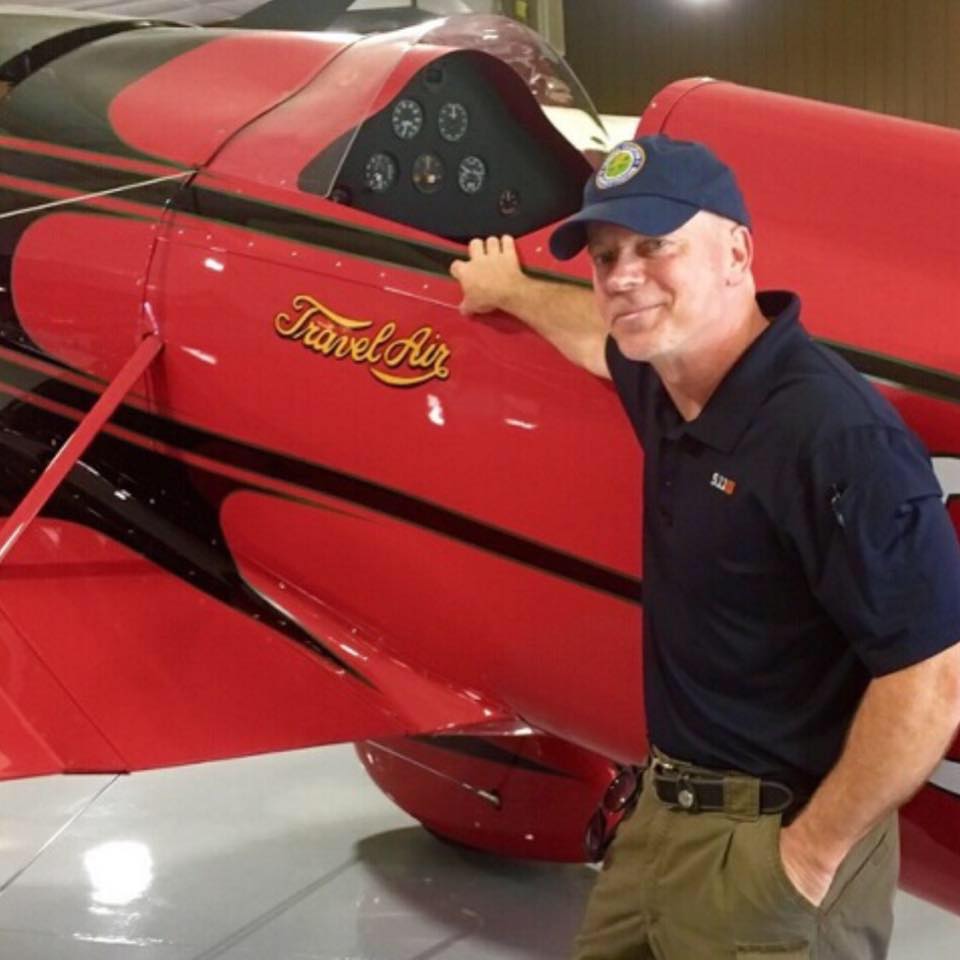
I was fortunate enough to learn from a World War II fighter pilot who had flown the legendary F4U Corsair from aircraft carriers in the Pacific. He wasn’t interested in teaching me tricks. He was teaching survival.
He trained me to fly a complete airshow routine. Rolls, loops, spins, hammerheads, unusual attitudes, and recoveries became second nature. Every maneuver had a purpose. Every lesson built confidence, discipline, and respect for what an airplane could do—and what it could do to you if you lost control.
Looking back, I realize those lessons saved my life more than once.
The story I’m about to tell happened early in my career as a flight instructor.
Like many new instructors, I believed my greatest challenge would be teaching people how to fly.
I was wrong.
The greatest challenge was learning how to recognize the students who could unknowingly put both of us in danger.
One student in particular taught me that lesson.
At first, nothing seemed unusual. He was eager to learn, respectful, and willing to work hard.
But as we spent more time together in the airplane, I began noticing something I hadn’t fully appreciated as a new instructor.
He was extremely skittish.
He startled easily.
When something unexpected happened, his reactions were immediate and emotional instead of deliberate and controlled.
Those are dangerous traits in aviation.
An airplane doesn’t care if you’re nervous. It responds instantly to every movement of your hands and feet. A frightened pilot can unknowingly create the very emergency he fears.
At the time, I didn’t yet understand just how dangerous those traits could become.
I was about to find out.
The Warning Signs
The warning signs were there.
I just didn’t recognize them yet.
My student was a retired banker who had fulfilled a lifelong dream by purchasing his own airplane. It was a beautiful machine—someone had cared for it meticulously, and now he trusted me to teach him how to fly it safely.
Before every lesson we completed a thorough preflight inspection.
On this particular day, he was wearing a baseball cap and moving with nervous energy. He walked quickly around the airplane, checking each item on the inspection.
As he rounded the wing, he never saw the lift strut.
He slammed into it at full speed.
The impact knocked him flat on his back.
He didn’t move.
For a moment, my heart stopped.
My first thought wasn’t about the airplane. It wasn’t even about the lesson.
It was, “Dear God…I think my student is dead.”
A second later, he sprang back to his feet as though nothing had happened.
He was shaken, embarrassed, and if anything, even more wound up than before.
At the time, I shrugged it off.
Looking back, that should have been my first warning.
Some people become calmer under pressure.
Others become more reactive.
In aviation, that difference can determine whether a situation ends as a lesson—or as an accident.
We climbed into his airplane and departed for the practice area.
Everything happened in seconds.
I was flying with a student, working on stalls. We had covered the procedure before the flight. He knew what the airplane was expected to do, what the stall would feel like, and how he was supposed to recover.
At least, he knew it in the classroom.
That is one of the first things instructors learn. A student can explain a maneuver perfectly while sitting safely on the ground and still react very differently when the nose suddenly drops below the horizon.
As the stall broke, the nose naturally dropped.
That sight terrified him.
Instead of relaxing the back pressure as we had practiced, he pulled back on the controls with every ounce of strength he had.
That was the first mistake.
When an airplane stalls, the wing has exceeded its critical angle of attack. Pulling farther back does not keep the airplane from descending. It increases the angle of attack and keeps the wing stalled. The instinct is understandable. The ground appears to be rising toward you, so every part of your body tells you to pull away from it.
But in a stall, that instinct can kill you.
At the same time, he pushed the rudder in the wrong direction.
The airplane rolled.
The wing quit flying.
We entered a spin.
I immediately reached over to recover the airplane, but the yoke would not move. It felt as though it had been welded in place.
For a split second, I could not understand why the controls were not responding. Then I looked at my student.
His eyes were enormous.
His arms were locked perfectly straight, every muscle in his body rigid. His hands were clamped around the controls in a death grip. One leg was driving the rudder pedal to the floor with all the strength he could muster.
He was not trying to fly anymore.
He was frozen in panic.
From an instructor’s perspective, that changed the nature of the emergency completely. The airplane itself was responding exactly as expected to the control inputs it was being given. The real problem was that the person making those inputs could no longer hear, reason, or respond.
I told him to release the controls.
He did not respond.
I tried to take the airplane from him, but he pulled harder. His entire body had become part of the control system, and fear had given him a level of strength I had not expected.
The airplane continued rotating.
The ground was rising rapidly.
There was not time for another explanation. There was not time to talk him through the recovery again. I had seconds.
I struck his arms and upper body hard enough to break his grip on the controls.
It was not anger.
It was not punishment.
It was not an instructional technique.
It was the only way I could regain control of the airplane before we ran out of altitude.
The instant he released the controls, I recovered from the spin and pulled the airplane out of the ensuing dive.
Then we flew away.
That part of the incident has always stayed with me because the recovery itself was almost routine once I had access to the controls. The airplane was recoverable. The obstacle was the student physically preventing the correct recovery inputs.
We returned to the airport and landed safely.
Only later did I ask him why he had finally let go.
His answer caught me completely off guard.
He said, “The only reason I released the controls was because I knew you had three black belts in martial arts. I thought you were like Chuck Norris, and for one split second, I was more afraid of you than I was of hitting the ground.”
I have no idea whether that was entirely true.
What I do know is that he released the controls, I recovered the airplane, and both of us walked away.
Back at the flight school, I told the story to the World War II Corsair pilot who had taught me aerobatics.
I explained how desperate the situation had become. I told him that when I realized the student was not going to release the controls voluntarily, I had decided I would do whatever was necessary to get him off them before we hit the ground.
He listened without interrupting.
When I finished, he looked at me quietly for a moment.
Then he asked one question.
“Were you prepared to do that?”
“Yes,” I answered.
He nodded once.
There was nothing more to say.
That flight taught me several lessons as an instructor.
The first was that knowledge and reaction are not the same thing. My student knew the stall-recovery procedure, but when confronted with the actual sight and sensation of the nose dropping, fear overrode his training.
The second was that an instructor must guard the controls during any maneuver in which a student’s incorrect reaction could quickly become dangerous. You do not wait until the airplane has fully departed controlled flight to become involved. You watch the student’s posture, grip, breathing, and control pressure. A rigid arm or tightening grip can be the first warning that the student is no longer processing the lesson normally.
The third was that altitude is not merely a number on the altimeter. It is time. Every second of delay consumes it. Every attempt to reason with a panicked student consumes more of it. An instructor must know when verbal instruction has failed and when immediate intervention is required.
The student’s technical mistakes were straightforward.
He maintained excessive back pressure after the stall.
He applied incorrect rudder.
He became rigid on the controls.
But the deeper mistake was allowing fear to replace judgment.
That is what made the event dangerous.
This is not a story about an instructor hitting a student.
It is a story about what can happen when a student’s survival instinct produces exactly the wrong control inputs, and when the instructor must regain command of the airplane before the situation becomes unrecoverable.
The airplane was still capable of flying.
The student was still capable of surviving.
But for several seconds, fear was flying the airplane.
And as the instructor, it was my responsibility to take it back.
Safety note: This personal account is presented for educational and storytelling purposes. It is not a substitute for instruction from a qualified flight instructor, an aircraft flight manual, or FAA-approved training guidance.